
Are you concerned about losing your balance and falling as you get older? You’re not alone—about one in four seniors experiences a fall every year.
Fortunately, whole body vibration (WBV) therapy offers a promising solution that’s simple, gentle, and surprisingly effective for improving balance and preventing falls.
Key Takeaways
- Vibration plate exercise can reduce falls by as much as 35-40% by improving muscle strength, balance, and bone density.
- Sessions of just 10-15 minutes, three to four times per week, show measurable improvements.
- Always start gently, and consult your healthcare provider first if you have medical concerns.
Table of Contents
- Key Takeaways
- How Whole Body Vibration Helps Seniors Avoid Falls
- Why Whole Body Vibration Works for Seniors Looking to Improve Their Balance
- 5 Major Advantages of Whole Body Vibration for Seniors
- How to Begin Using Whole Body Vibration
- Balance Training with WBV: Safe Exercises
- Who Should Avoid Whole Body Vibration?
- Conditions where WBV Therapy may not be appropriate
- What the Research Says: Findings from Studies
- Pairing WBV with Other Fall Prevention Techniques
- Commonly Asked Questions
Falls and broken bones are serious threats to independent living and quality of life for seniors. About one in four older adults fall each year, so finding strategies to prevent those falls is a big deal.
Whole body vibration (WBV) therapy is one of the best strategies available, because it only needs a small amount of physical effort to get major benefits balance and stability improvements.
At FitSenior.net, we have reviewed a wide range of resources on whole body vibration platforms that are tailored to seniors who want to improve their balance and avoid falls.
Our findings have discovered specific frequency patterns proven by research to be really effective in helping older adults maintain their stability and independence.
How Whole Body Vibration Helps Seniors Avoid Falls
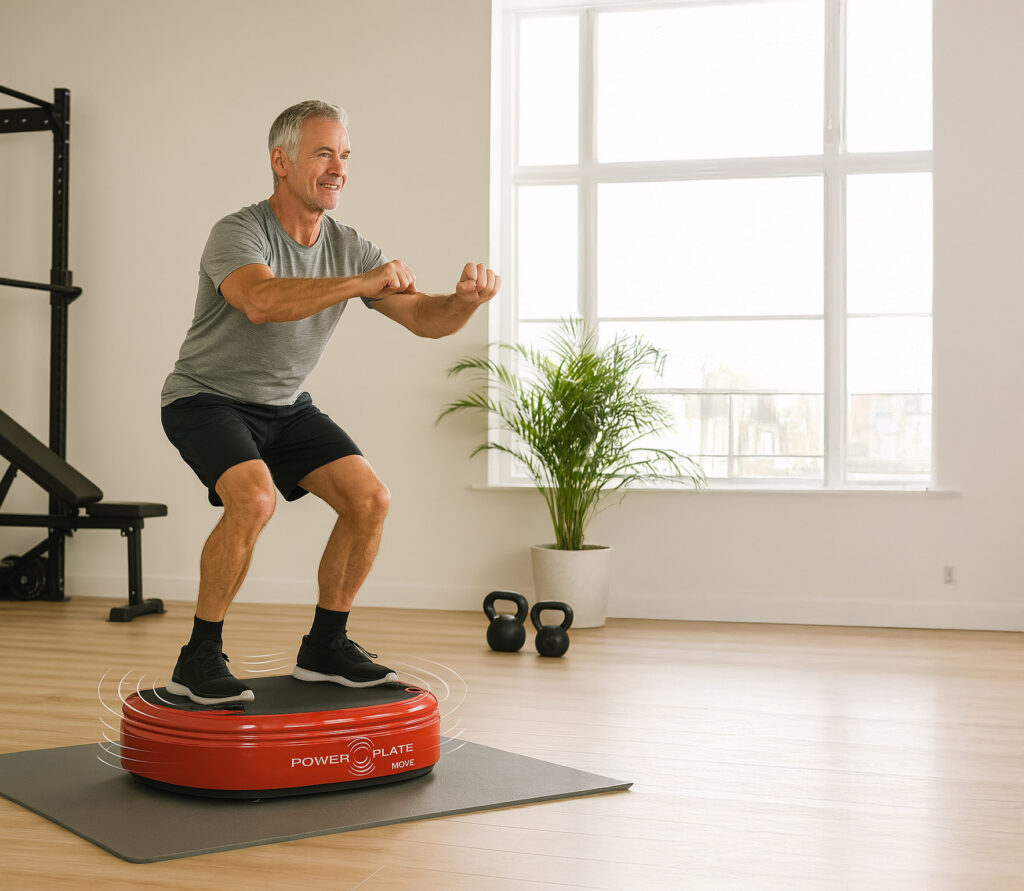
Whole body vibration can be done standing, sitting, or doing simple exercises on a platform that generates controlled vibrations.
These vibrations move through the body, making muscles rapidly contract and relax—often 30 to 50 times per second. This mechanical stimulation creates instability that the body must constantly adjust to, essentially providing a type of balance training that’s both passive and intensive.
When you stand on a vibrating platform, your body makes tiny adjustments that strengthen the same nerve and muscle connections you need to avoid falling.
These tiny adjustments are easier for seniors with limited mobility to make than traditional exercises, but they still work out multiple muscle groups at the same time.
Clinical studies show that using a vibrating platform regularly can significantly improve how quickly you react when you start to fall.
The game-changer for seniors doing vibration plate exercises is its low-impact nature. This mode of “passive” exercise provides outsized benefits without over-stressing fragile joints or requiring complex movement patterns.
This accessibility means even people with physical limitations can participate and gain benefits that would be difficult to achieve through traditional exercise programs.
Why Whole Body Vibration Works for Seniors Looking to Improve Their Balance
Balance isn’t just one skill, it’s a complex interaction between several body systems. As we get older, these systems—vision, inner ear function,
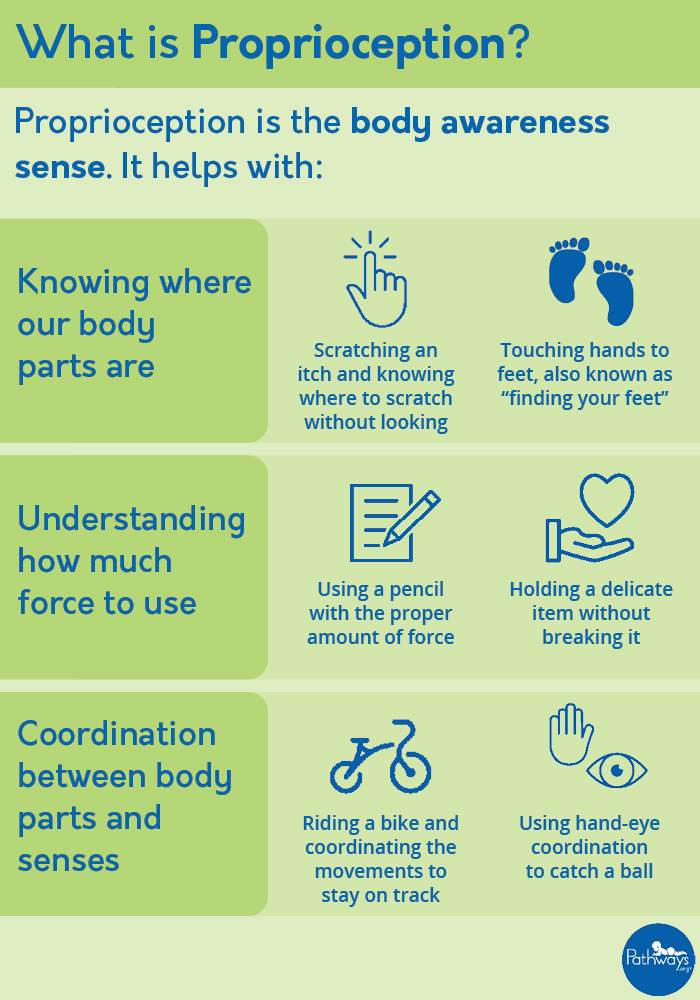
Proprioception (knowing where your body is in space), and muscle strength—often decline together. Whole body vibration addresses many parts of this balance equation at the same time, which makes it especially effective for older adults.
Understanding Vibration Therapy
The reason why WBV therapy works so well is because of the way the vibrations interact with the body’s natural reflexes. As the platform shifts, it causes a small amount of instability that triggers the body’s proprioceptors. These are specialized sensory receptors found in muscles and joints that can sense position and movement. This triggering happens at a much higher rate than it would during normal activity, effectively giving the body a concentrated dose of balance training.
A study published in the International Journal of Environmental Research and Public Health shows that these mechanical signals trigger muscle spindles, which in turn stimulate alpha motor neurons resulting in reflexive muscle contractions. For older adults, this process creates a training effect that strengthens balance-related neural pathways without conscious effort. The vibrations essentially “remind” the body how to maintain stability, reinforcing pathways that may have weakened with age.
How WBV Works to Strengthen Core Muscles
Core stability is the basis of balance, and whole body vibration is a standout when it comes to targeting these critical muscles. The vibrations make the body’s core muscles work continuously to keep posture and stability on the platform as it moves.
- Core muscles become more adept at responding to sudden movements
- Lower back muscles gain more endurance for keeping good posture
- Hip stabilizers get stronger to enhance the steadiness of walking
- Deep postural muscles receive activation that’s hard to achieve through conventional exercises
This core strengthening occurs naturally during WBV sessions, even when seniors aren’t consciously performing particular exercises. The constant micro-adjustments needed to remain stable on the platform train these muscles to react more quickly to balance challenges in daily life.
Enhancing Body Awareness Through Vibration
As we age, our body’s sense of its own position—also known as proprioception—naturally decreases, and this is a big factor in the risk of falls. Whole body vibration directly affects this system by making the body constantly adjust its position. The vibrating platform stimulates the proprioceptive sensors throughout the body, effectively making them more sensitive and reactive, or “retraining” them.
Research has shown that older adults who regularly take part in vibration plate training sessions get noticeable improvements in joint position sense and kinesthetic perception.
This results in improved control when shifting weight, making turning movements, and in other typical situations where falls often happen.
The ongoing feedback loop that is established during vibration therapy aids in restoring neural pathways that may have deteriorated over time.
What makes WBV so useful for proprioception is that the improvements can be applied to everyday activities.
Unlike specific balance exercises that may not translate to day to day use, the genius of vibration therapy creates adaptive responses that help seniors during everyday activities, when they are most at risk of falling.
5 Major Advantages of Whole Body Vibration for Seniors
1. Enhanced Bone Density
Osteoporosis and bone fragility are major issues for older adults, especially those prone to falling. Vibration plate training offers mechanical loading that boosts the activity of osteoblasts (cells that form bone) while suppressing osteoclasts (cells that break down bone tissue).
A systematic review published in Clinical Rehabilitation discovered that consistent WBV therapy resulted in relatively modest yet meaningful improvements in bone mineral density, especially in the hip and spine—areas most susceptible to fractures.
2. Improved Muscle Power even without Intense Workouts
There’s a strong connection between muscle weakness and the risk of falls, but traditional strength training can seem intimidating to many older people.
WBV provides a different route to building strength, through something scientists refer to as “reflexive muscle contractions.” These quick contractions happen automatically in response to vibration, and can involve as much as 95% of muscle fibers—much more than the amount usually activated during regular exercise.
Research shows especially hopeful outcomes for lower body power, with enhancements in leg extension force, ankle power, and overall functional mobility.
For older adults with limited exercise capacity, these benefits provide a significant edge in stopping the downward spiral of inactivity and weakness that often comes before severe falls.
- Increases leg power crucial for recovering from stumbles
- Strengthens ankle muscles essential for stability
- Improves overall muscular endurance for daily activities
- Reduces age-related sarcopenia (muscle loss)
3. Improved Balance and Coordination
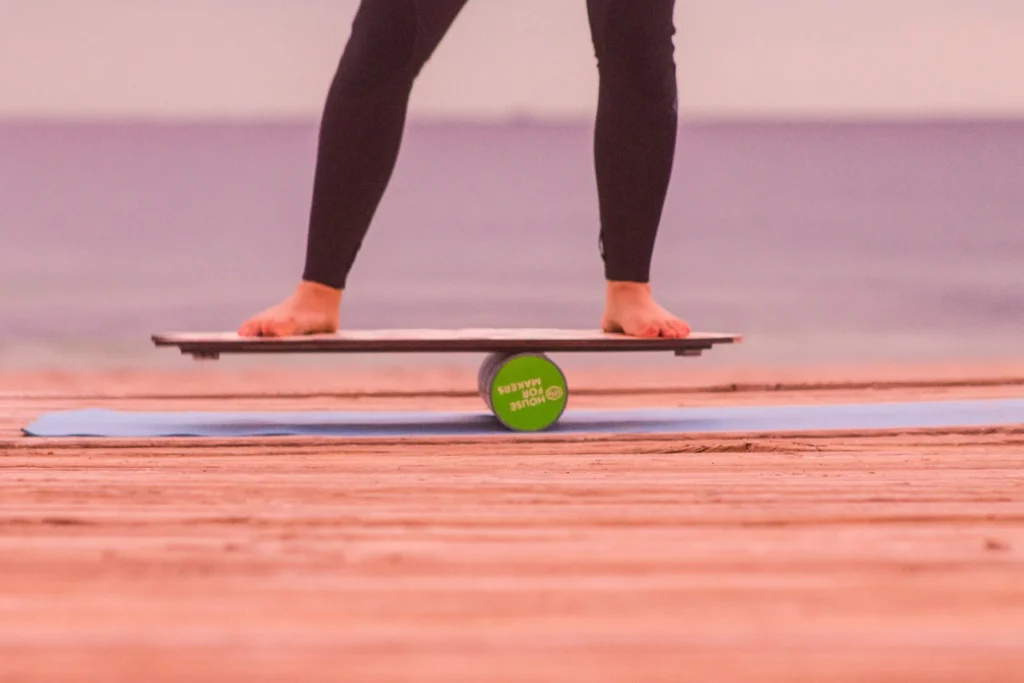
Perhaps the biggest benefit of WBV for fall prevention is its impact on balance and coordination. Multiple clinical trials have documented dramatic improvements in standardized balance assessments following vibration plate training.
These improvements stem from the combination of strengthened muscles, enhanced proprioception, and better sensorimotor integration—all critical components of maintaining stability.
4. Improved Blood Flow
Whole Body Vibration therapy produces vibrations that cause quick vasodilation and improved blood flow throughout the body. This is especially beneficial for the extremities.
The improved circulation brings more oxygen and nutrients to muscles and helps remove metabolic waste products. For seniors with peripheral circulation problems, which is a common issue with aging, this benefit is not only for preventing falls but also for improving overall health.
Improved blood flow can also lead to quicker recovery times between workouts and less muscle pain, making it simpler for seniors to stick to their fall prevention routines. This creates a virtuous cycle where increased comfort results in better compliance, which then leads to improved results.

5. Decreased Fear of Falling
Not only does vibration therapy provide physical benefits, but it also tackles a crucial mental aspect of the risk of falling—the fear of falling.
Fear of falling often means seniors hold back from many types of activities.
When you stop exercising the muscles that give you stability, that leads to deconditioning. The result is that you become even more susceptible to falling.
Research shows that seniors who participate in regular WBV sessions report a big increase in confidence in their balance skills and a decrease in fear-related activity limitation.
How to Begin Using Whole Body Vibration
Starting a whole body vibration program takes some prep work and knowledge of the different machines available.
For the most benefit with the least amount of risk, you should take a systematic approach to this therapy.
Start at lower intensity settings and slowly increase as you get more comfortable and used to the sensation.
The first goal should be getting used to the feeling rather than trying to see immediate results. For more information on the benefits and considerations, you can explore this research article.
Varieties of Vibration Platforms
There are many types of vibration platforms, and the differences between them can have a big impact on your results.
Oscillating platforms move like a see-saw and are usually easier on the joints, while still providing effective stimulation for balance improvement.
Linear platforms, which mainly move up and down, usually provide more intense stimulation but can be less comfortable if you have sensitive joints.
Tri-planar platforms provide vibration in various directions at the same time, providing a more complete stimulation. The downside is that they’re more expensive.
For the majority of seniors who are concentrating on balance and fall prevention, oscillating platforms are the best place to start, offering adequate advantages with minimal discomfort.
Oscillating platforms: Side-to-side movement, gentler on joints
Linear platforms: Up-and-down movement, more intense muscle activation
Tri-planar platforms: Multi-directional movement, comprehensive stimulation
Recommended Settings for Seniors
Frequency settings on vibration platforms typically range from 5 to 50 Hz (vibrations per second), with amplitude (intensity of movement) varying between machines.
For seniors new to whole body vibration, research suggests starting at the lower end of the spectrum—between 6-15 Hz—with minimal amplitude.
These beginner settings reduce the risk of discomfort while still providing therapeutic benefits.
When the body gets used to it, slowly moving toward frequencies of 15-25 Hz has shown the best results for improving balance in clinical studies.
The session should start at just 1-2 minutes and slowly increase to 10-15 minutes as the body can handle it.
The most important thing is to be consistent rather than intense. Gentle, regular sessions produce better results than occasional intense exposure.
| Suggested Vibration Settings | for Older Adults |
|---|---|
| Starting frequency | 6-15 Hz |
| Goal frequency | 15-25 Hz |
| Beginning duration | 1-2 minutes |
| Goal duration | 10-15 minutes |
| Sessions per week | 3-4 times |
| Rest period between sessions | At least 24 hours |
Need for Professional Advice
Older adults should seek advice from their healthcare providers before starting vibration therapy exercise, especially if they have pre-existing medical conditions.
Physical therapists can provide crucial advice on correct positioning, progression, and technique to optimize benefits and reduce risks.
Many senior centers and rehabilitation facilities now provide supervised WBV sessions, which are a great way to start the therapy with professional supervision.
If you’re planning to buy a home unit, it’s a good idea to schedule at least one session with a physical therapist. They can give you personalized advice and correct your technique.
This initial investment in professional guidance can help you avoid common mistakes that might make the treatment less effective or more uncomfortable.
Balance Training with WBV: Safe Exercises
Just standing on a vibration plate will help improve balance, but the benefits can be boosted by what you do while you’re on the device. Here’s how to get started, first with a standing posture, then with moving into a few non-strenuous exercises that will help you maximize the benefits of a vibration plate.

1. Basic Standing Posture
The first exercise in WBV balance training is simply standing on the platform in the correct posture. You should stand with your feet apart the same width as your shoulders, with your knees bent slightly (about 20 degrees), your back straight, and your core gently engaged.
The slight bend in the knees is very important because it stops the vibration from going straight up the skeletal system and instead makes the muscles absorb and respond to the movement.
Depending on your stability needs, you can change the position of your hands.
If you need more support, you can lightly hold onto the machine’s handles if it has them. If you want a greater challenge, you can put your hands at your sides or even fold them across your chest.
As you get more confident in your balance, you can move from standing with support to standing without support.
2. Toe Stand Exercise
The toe stand exercise is designed to improve ankle strength and proprioception, which are both crucial for maintaining balance and often deteriorate as we age.
While the platform is vibrating, lift your heels off the ground and balance on the balls of your feet for 5-10 seconds, before lowering your heels back down.
It’s best to start with 5-8 repetitions and use handrails or other support for stability if needed.
For more information on maintaining balance, you can read this study on balance improvement.
As you get stronger, try to hold the raised position for longer periods of time or try the movement with less hand support.
The vibration greatly increases the effectiveness of this simple movement, leading to faster strength and coordination improvements than the same exercise performed on solid ground.
3. Half-Squat Stance
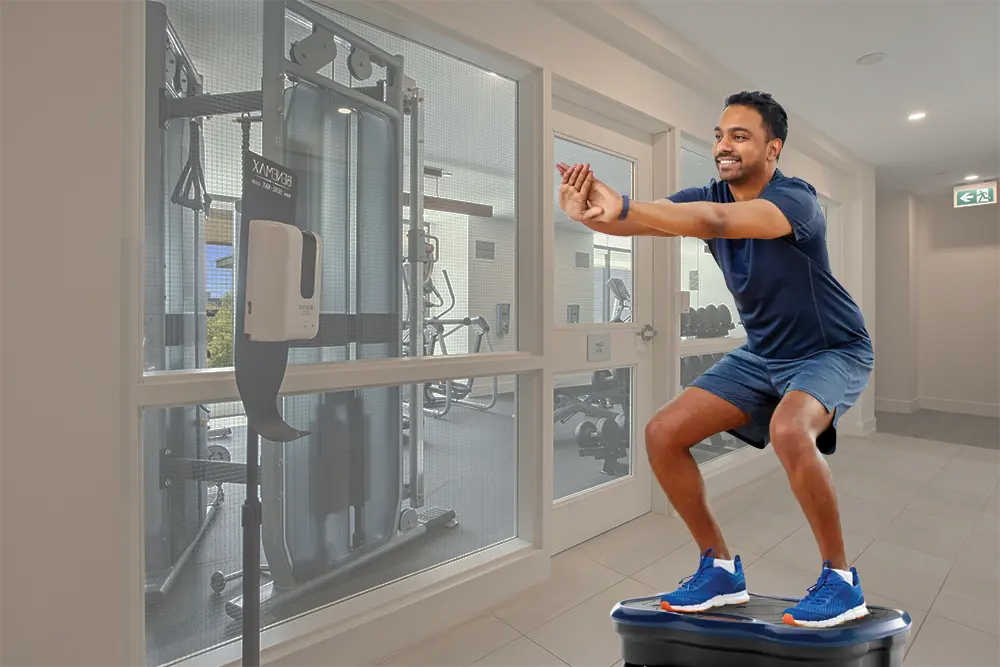
The half-squat works out several big muscles at once while also testing the balance system in a practical stance.
With your feet shoulder-width apart on the platform, bend your knees to about 30-45 degrees (as if you were about to sit down in a chair), holding this position for 30-60 seconds while the vibration goes on. The back should stay straight, with the weight evenly spread between the heels and the middle of the foot.
This stance specifically targets the quads, hamstrings, and glutes, which are all crucial for maintaining balance during everyday tasks like getting up from a chair or walking up and down stairs. As your strength increases, you can slowly extend the amount of time you hold the position, or slightly deepen the squat, always prioritizing correct form over depth.
4. Shifting Your Weight (Like Dancing)

Dynamic balance, or the ability to stay stable while in motion, is an important part of preventing falls.
Practicing simple weight-shifting exercises on the vibration platform is a great way to improve this skill. Practice gently shifting your weight from one foot to the other, pausing for a moment on each side, while keeping your knees slightly bent and maintaining good posture.
When you feel comfortable, you can begin to lift one foot off the platform for a short while before placing it back down and switching to the other side.
This imitates the weight shifts that happen when you walk and adds the extra challenge and advantage of the vibration stimulus. The aim is to make smooth, controlled transfers rather than quick movements.
Who Should Avoid Whole Body Vibration?
Health Risk Conditions
While whole body vibration can be beneficial, it’s not for everyone. Some medical conditions make it too risky.
If you’re a senior with acute thrombosis or a risk of blood clots, you should avoid vibration therapy because the increased circulation could move the clots.
If you have advanced osteoporosis or recent fractures, you should also avoid WBV until your doctor says it’s okay. The vibration could make these conditions worse.
There are some other cases where vibration training should be avoided. These include recent joint replacements (usually within 6-12 months, based on healing), acute inflammation, fresh wounds, or recently placed surgical implants.
Seniors with pacemakers should consult with their cardiologists because some older pacemaker models may be affected by the vibration frequencies.
Conditions where WBV Therapy may not be appropriate
- Acute thrombosis or blood clot risk
- Severe, untreated osteoporosis
- Recent fractures or joint replacements
- Active infections or inflammatory conditions
- Severe cardiovascular disease
- Recently placed surgical implants
- Epilepsy (for some individuals)
When to Consult Your Doctor First
Besides the conditions listed above, there are other cases where it’s smart to consult with a health care professional before beginning WBV therapy.
Seniors with controlled hypertension should discuss appropriate vibration intensity with their physicians, since some research indicates temporary blood pressure elevations during sessions.
Those with neurological conditions like Parkinson’s disease may actually benefit significantly from WBV but require tailored protocols developed with neurologist input.
It’s important for seniors with osteoarthritis to consult with their doctor about the recommeded vibration frequencies and durations, to make sure the therapy helps their joints without causing more inflammation.
People with diabetes, especially those with peripheral neuropathy, should also talk to their doctor about monitoring their sensations during the sessions.
In general, anyone with a chronic health condition or who is taking several medications that could affect their balance or circulation should get medical advice before starting.
What the Research Says: Findings from Studies
The past ten years have seen a significant increase in research on whole body vibration for seniors.
What started as initial explorations has now become comprehensive clinical trials. Systematic reviews and meta-analyses now offer solid proof for specific applications and procedures that have shown evidence for helping with balance and fall prevention.
Studies have gotten better over time, with newer ones using more people, going on for longer, and using better ways to measure results.
This means we can give more specific advice and be more sure that it’s a good choice for many populations of older adults.
Medical Proof for Preventing Falls
A pivotal study in the Archives of Physical Medicine and Rehabilitation showed a 35-40% decrease in falls among nursing home residents who took part in six weeks of WBV therapy, compared to those who did not.
This is comparable to results regularly experienced by users of the Otaga Exercise Program, developed in New Zealand and considered the gold standard for fall prevention in older adults.
Likewise, a study in the International Journal of Environmental Research and Public Health found that seniors living in the community who completed a 10-week WBV program had significantly fewer falls in the following year than those who only did traditional exercise.
How does it compare to traditional balance exercises?
When you put vibration plate therapy head-to-head with traditional balance exercises, WBV seems to have a few unique benefits for seniors.
One study in the Journal of Geriatric Physical Therapy compared the two and found that, while both traditional balance training and WBV improved measures of stability, the group that used vibration got the same results in about half the time.
This makes WBV especially useful for seniors who may have trouble sticking with an exercise program or who have limited energy.
Moreover, studies show that WBV yields more uniform outcomes among participants with different fitness levels.
Contrary to traditional exercises where results frequently have a strong correlation with physical ability, WBV seems to provide benefits even to seniors with substantial mobility restrictions who are unable to fully engage in standard balance programs.
It’s worth noting that many studies suggest that seniors are more likely to stick with WBV programs than traditional exercise programs.
The fact that WBV is a passive form of therapy, combined with the short duration of each session and the quick results, seems to eliminate many of the common reasons older adults don’t exercise.
Pairing WBV with Other Fall Prevention Techniques
Though whole body vibration has shown some promising outcomes, specialists stress that it’s most effective when used as part of a holistic approach to fall prevention.
Combining WBV with changes to the environment (like improving the lighting in the home, getting rid of tripping hazards), eye exams, medication reviews, and nutritional support results in a multi-pronged approach that addresses the complicated nature of the risk of falling.
Many successful clinical programs now include vibration therapy sessions along with traditional strength training exercises and gait training, allowing each part to enhance the others.
Commonly Asked Questions
Whole body vibration is becoming increasingly popular among the elderly, leading to a number of frequently asked questions about its use, effectiveness, and availability.
The following responses are based on the latest research and clinical best practices.
Grasping these functional elements allows older adults to make educated choices about integrating vibration therapy into their fall prevention plan.
What is the recommended frequency for seniors to use whole body vibration platforms?
Studies suggest that for seniors to gain the best balance benefits, they should have 3-4 sessions per week, with a minimum of 24 hours between sessions for recovery.
Once they are fully used to the therapy, each session should be 10-15 minutes long, but beginners should start with only 1-2 minutes and slowly increase the duration.
This frequency provides enough stimulation while avoiding overtraining, which could potentially lead to fatigue and an increased risk of falls.
How do low-cost and high-cost vibration machines differ?
The main distinctions between low-cost and high-cost vibration platforms are mechanical dependability, frequency control accuracy, and vibration quality.
More expensive machines usually provide more stable vibration frequencies during sessions, which is vital for therapeutic efficiency.
They also often offer more accurate control over amplitude and usually make less mechanical noise when in use, which can be a significant factor for home use.
Does Medicare or insurance cover whole body vibration?
At this time, Medicare usually does not cover whole body vibration platforms for use at home.
However, some Medicare Advantage plans and private insurance companies may cover supervised WBV therapy sessions when they are part of physical therapy if a doctor prescribes them for specific medical conditions.
Coverage varies a lot between plans and typically requires showing medical necessity and appropriate medical supervision.
How soon can seniors expect to see improvements from whole body vibration?
Most studies show measurable improvements in balance within 3-6 weeks when sessions are held 3 times a week.
Improvements in confidence and perceived stability often occur even sooner, sometimes after just 5-10 sessions.
However, for a significant reduction in the risk of falls, consistent participation for at least 8-12 weeks is typically necessary to develop the strength, proprioceptive awareness, and automatic balance responses that translate to real-world fall prevention.
Whole body vibration is a convenient, effective balance training method that overcomes many obstacles seniors encounter with traditional exercise routines.
If used correctly under the right medical supervision, it can be a useful instrument in the crucial task of preventing falls and preserving independence in old age. For more information on the benefits and applications of whole body vibration, you can refer to this study on its effectiveness.

Certified Personal Trainer, NCSF #2742209
Certified Strength Coach, NCSF #2742510
Corrective Exercise Specialist, NCSF #5204278
3rd Degree Black Belt Taekwondo (still kicking at 76!)